

Watch The Watch
Time Feels Off. Now They Want to Change the Clock.

Follow: Twitter | Instagram Truth Lives Here: Rumble | Odysee | YouTube HONEYCOLONY | Websites: MaryamHenein.com | HoneyColony.com| BUY NOW ON AMAZON!: Operation George Floyd
I lost a day this weekend. Or at least I thought I did.
I moved through Saturday convinced it was Sunday. The energies felt fast but like molasses simultaneously. This was not one of those momentary calendar glitches that come with working too much and sleeping too little. I am a timekeeper, which is why I was surprised by myself.
When I finally realized what day it actually was, I had the peculiar sensation of being handed back 24 hours I hadn’t known were missing.
Then I remembered that Saturday, July 25, was the Day Out of Time—the day the 13 Moon calendar places outside its regular monthly count, between the closing year and the new one beginning July 26.
A day deliberately set apart from the calendar. And I had spent it living on the wrong day.
Interesting.
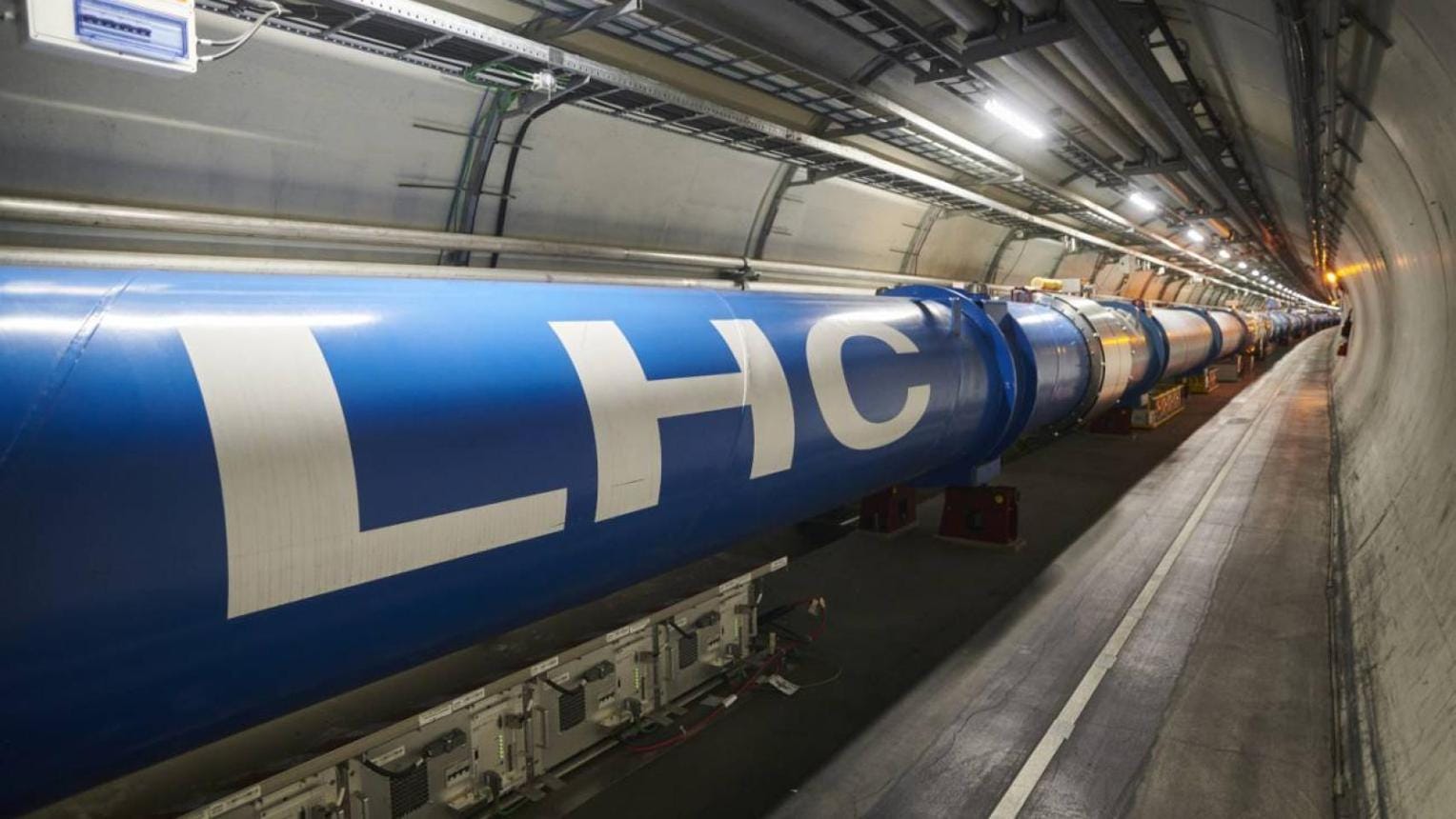
That alone is strange enough. But exactly four weeks earlier, the final proton beams had circulated through CERN’s Large Hadron Collider before the machine was switched off for a four-year transformation.
Now a growing number of people—including me, with six planets in Capricorn, living under Saturn’s relentless clock— are feeling time has gone haywire.
Slow-fast. Fast-slow. Hours stretch. Entire days collapse. Dates arrive in no time.
In any case, what we call time may be less cosmic law and more of a containment system: a manufactured construct used to divide life into units of labor, debt, productivity, and obedience.
In the realm of the soul, there is no time. No minutes. No deadlines. No Gregorian grid nailed across eternity.
Earth Refuses To Keep Perfect Time
Earth does not rotate in 24 increments printed on our watches. Its rotation fluctuates constantly, influenced by the atmosphere, oceans, Moon, movement inside the planet, and the redistribution of mass across its surface.
Since 2020, Earth has produced some of the shortest days recorded during the atomic-clock era. That trend began shifting again in 2026, with days gradually lengthening—but they still do not conform obediently to 86,400 seconds.
On July 26, Earth completed its rotation approximately 0.60 milliseconds early. The shortest day measured so far this year occurred on June 28, when the planet finished roughly 0.66 milliseconds early, according to current Earth-rotation data.
Six-tenths of a millisecond did not steal my Sunday. So it seems that I had tapped into something.
For more than half a century, atomic time and Earth time have occasionally required reconciliation. When the planet’s irregular rotation drifts too far from the precision of atomic clocks, timekeepers insert a leap second into Coordinated Universal Time.
Twenty-seven leap seconds have been added since 1972.
But Earth’s more recent acceleration raised the possibility of something humanity has never done before:
Take one away.
A 2024 paper published in Nature calculated that, under the existing UTC system, Earth’s changing rotation could require the first negative leap second by 2029. Instead of seeing 11:59:59 before midnight, the official clock could skip directly from 11:59:58 to 12:00:00.
One second would simply cease to exist. And consider that a second here may be like a lifetime somewhere else.
Even polar ice enters the story. As ice melts and its mass is redistributed through the oceans, Earth’s rotation is affected—much as a spinning skater slows by extending her arms. The researchers calculated that this redistribution may have delayed the negative leap second by approximately three years.
But now the keepers of official time are considering a more radical solution: Stop forcing atomic time to remain so closely connected to the planet at all.
What could go wrong?
In 2022, the international body responsible for global measurement standards decided that the permitted difference between astronomical time and UTC should be expanded by or before 2035.
A 2026 draft resolution goes further, proposing continuous UTC beginning May 20, 2027, and eventually allowing astronomical and atomic time to diverge by as much as 3,600 seconds—one hour.
That hour would accumulate over centuries, not disappear overnight. But the principle is enormous.
When Earth and the clock disagree, the emerging solution is no longer necessarily to correct the clock. It is to loosen the clock’s relationship to Earth.
Time keeps on slipping into the future and out of the containers humans built for it.
The Collider Goes Dark. Or Did It?
At 5:52 a.m. on June 27, the final protons of the Large Hadron Collider’s third data-taking period circulated through the accelerator.
Two days later, CERN formally announced the beginning of Long Shutdown 3: an extensive transformation of the world’s most powerful particle collider into the High-Luminosity LHC.
Teams are dismantling approximately 1.2 kilometers of the accelerator and installing new cryogenic systems, magnets and equipment. Particle beams are currently scheduled to return in 2030.
CERN itself has not shut down. Its other accelerators will continue operating until later this summer.
But the 27-kilometer machine that has occupied the scientific—and metaphysical—imagination for nearly two decades has reportedly stopped colliding particles.
And CERN’s role in this story is not merely that it contains very large magnets.
The LHC is one of the most exacting time machines humanity has ever constructed—not a machine that transports people through time, but one that cannot operate unless time is divided and controlled with almost incomprehensible precision.
Its proton bunches are spaced approximately 25 nanoseconds apart and can sweep through each other around 40 million times per second. The particles circle the 27-kilometer tunnel 11,245 times every second, synchronized with oscillating radio-frequency fields that accelerate them during each revolution.
Its main dipole magnets generate fields of approximately 8.3 tesla—more than 100,000 times stronger than Earth’s surface magnetic field, according to CERN’s own description.
That does not mean CERN controls planetary time. It means CERN is not merely “a big science experiment.” It is an immense clockwork instrument operating at the edge of matter, magnetism, measurement and relativity.
A machine calibrated in billionths of a second has gone quiet at the precise moment Earth time, official time, political time and experienced time are all being renegotiated.
And almost immediately after the shutdown, the Internet began checking reality.
A July thread in r/HighStrangeness titled “The Glitch: CERN, the Mandela Effect and a World That Was Edited” attracted roughly a thousand upvotes. Its premise inverted years of CERN folklore: if switching on the LHC had somehow scrambled reality, could switching it off cause reality to snap back?
People began comparing Mandela Effects. Are old memories returning? Are timelines merging? Is the Fruit of the Loom cornucopia back?
Then came the reports about time.
On July 26, someone in r/Retconned asked: “Time starting to speed back up again?” The poster said time had seemed slower following the CERN shutdown, but that the day had suddenly flown by.
Other commenters disagreed. Time was still slower. Time felt normal again.
That disagreement is what interests me. If everyone were repeating the same TikTok theory, it would be considerably less interesting. Instead, people are reporting something messier and harder to package:
Temporal disorientation. Fast. Slow. Normal again. A day disappearing. A day dragging. Dates feeling wrong. Not one uniform phenomenon. A disturbance in the perception of duration.
There is no evidence that shutting down the LHC altered Earth’s rotation or repaired a timeline. The collider shutdown was planned engineering, and Earth’s rotational fluctuations are measurable geophysical events.
But disproving one proposed explanation does not make the underlying observation disappear.
People are talking about time.
A lot.
Lost In Gravity
August 12, 2026.
According to a viral story, Earth will lose gravity for seven seconds at precisely 14:33 GMT. The supposed source is a “leaked NASA document” describing a secret operation called Project Anchor—complete with an alleged $89 million budget, colliding black holes, gravitational waves and predictions of catastrophic casualties.
There is only one problem. Nobody has produced the document.
There is no verifiable NASA program called Project Anchor, no corresponding record in NASA’s technical archives and no scientific mechanism by which gravitational waves could switch off Earth’s gravity.
The rumor appears to have originated with an Instagram account called @mr_danya_of, which posted the story on December 31, 2025, while claiming the document had been leaked in November 2024. That account has circulated other fabricated reports.
Not that I trust Snopes, but when they asked NASA directly, the agency’s response was unambiguous: Earth will not lose gravity on August 12. Gravity is produced by Earth’s mass. For it to disappear, the mass of the planet—its core, mantle, crust, oceans and atmosphere—would somehow have to disappear with it.
So the alleged document is a rumor. But nonetheless the date is not.
On August 12, a real total solar eclipse will cross northern Russia, Greenland, Iceland, the Atlantic, Spain and a small corner of Portugal. Totality will last as long as approximately two minutes and eighteen seconds.
The Moon will temporarily erase the Sun.
Dismiss it merely because it is false and you miss what made it effective. The fabrication attached itself to a genuine celestial event, borrowed NASA’s authority and added the bureaucratic details that make a lie feel documented: a project name, a budget, an exact timestamp and an alleged leaked file.
The most successful fabrication is not created from nothing. It is fastened to something true.
Daylight Saving Time
Meanwhile, Washington suddenly decided it was time to reorganize time.
On July 14, the House passed the Sunshine Protection Act by a vote of 308–117. The bill would end the twice-yearly clock change and make daylight saving time the default year-round system, while allowing states to opt for permanent standard time.
This is not a new crusade.
The Sunshine Protection Act was first introduced in March 2018. It died in Congress, returned in 2019, returned again in 2021, passed the Senate unanimously in 2022—and then died because the House refused to vote on it. It returned in 2023 and again in 2025.
That is more than eight years of legislative limbo.
So why now?
Only 12 percent of Americans support changing the clocks twice a year. Dozens of states have already introduced legislation demanding one permanent time.
What changed was political alignment. Trump made permanent daylight saving time an administration priority, urging the Senate to finish the job. He now personally calling senators, while Transportation Secretary Sean Duffy wants the measure attached to the federal transportation legislation expiring September 30.
That is the official explanation.
But after eight years of congressional paralysis, Washington suddenly found urgency at the precise moment Earth’s rotation, atomic time and CERN’s shutdown were already pushing time into the public consciousness.
Which time do we keep?
Permanent daylight saving time does not simply mean leaving the clocks alone. It means permanently advancing civil time one hour away from standard time—and therefore farther from the natural solar cycle.
The American Academy of Sleep Medicine recommends the opposite precisely: abolish seasonal clock changes, but adopt permanent standard time because it aligns more closely with human circadian biology.
We have also performed the permanent-daylight-saving-time experiment before.
In January 1974, during the energy crisis, America moved onto year-round daylight saving time. The promise of extra evening sunlight sounded wonderful.
Dark winter mornings sounded considerably less wonderful once children were standing in them waiting for school buses.
Public support collapsed. Congress reversed course that same year and restored winter standard time, in part because of concerns over the safety of children traveling to school before sunrise, according to the Ford administration’s records.
Apparently, fifty years is long enough to forget an experiment and call it an idea.
International timekeepers are considering allowing atomic time to drift as much as an hour away from Earth’s rotation.
We talk about “time” as though it were one thing. But It isn’t.
There is astronomical time: the rotation of a planet that stubbornly refuses to complete its days in exactly 86,400 seconds.
There is atomic time: the extraordinary precision civilization engineered so that satellites, markets, telecommunications and computer networks can agree on what now means.
There is machine time: CERN dividing a second into billionths, circulating protons 11,245 times per second and arranging collisions in intervals the human nervous system cannot perceive.
There is civil time: politicians deciding what number should appear on the clock when the Sun rises.
And then there is experienced time.
Five minutes waiting for news can become an hour. Five years can collapse into a smell. An afternoon vanishes into a screen. You wake from a dream containing what felt like days and discover you have been asleep for twenty minutes.
Watch the watch.
If this made you look twice at the clock, restack it. Independent investigative journalism survives when real people refuse to let inconvenient work disappear.
Earth or our realm doesn’t rotate at all. It’s a flat plane with water held in by an ice wall. There is no curve. Our Plane t is the center and the sun and moon are the light of the day and the light of the night and move around us, inside a firmament.